

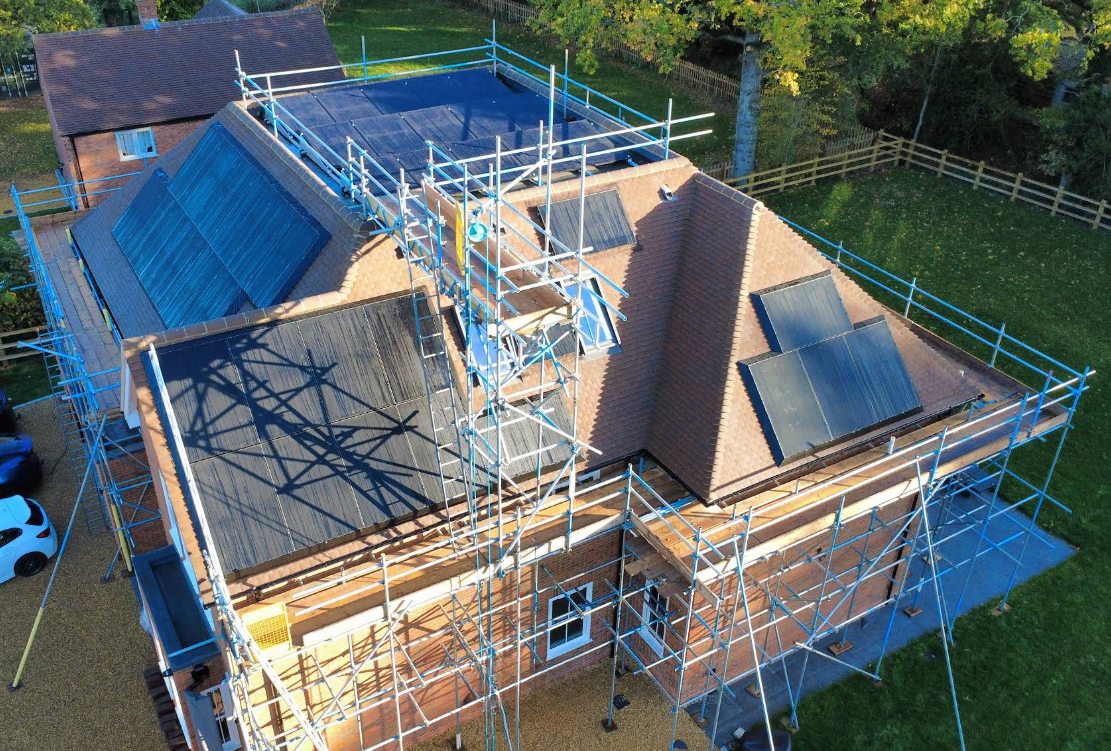
This residential property has taken a significant step towards long-term energy resilience by installing a large-scale solar and battery storage system. Designed to dramatically reduce reliance on the grid, the system delivers substantial electricity savings while providing a high level of energy independence for the household.
With rising electricity prices and increasing demand for household power, the project was designed to maximise on-site generation, storage, and smart energy use across the entire year.
Why Solar and Battery Storage Was Chosen
Electricity demand at the property is well above the national average, driven by a combination of household usage patterns and the desire to future-proof against further price volatility. Rather than remaining exposed to long-term grid price increases, the homeowner opted to generate and store electricity on-site.
By pairing a large solar array with substantial battery storage, the system is designed to prioritise self-consumption, reduce peak-rate imports, and maintain resilience during grid outages. The result is a home that operates largely independently of the grid for most of the year.
The Solar and Battery System Design
The system installed consists of:
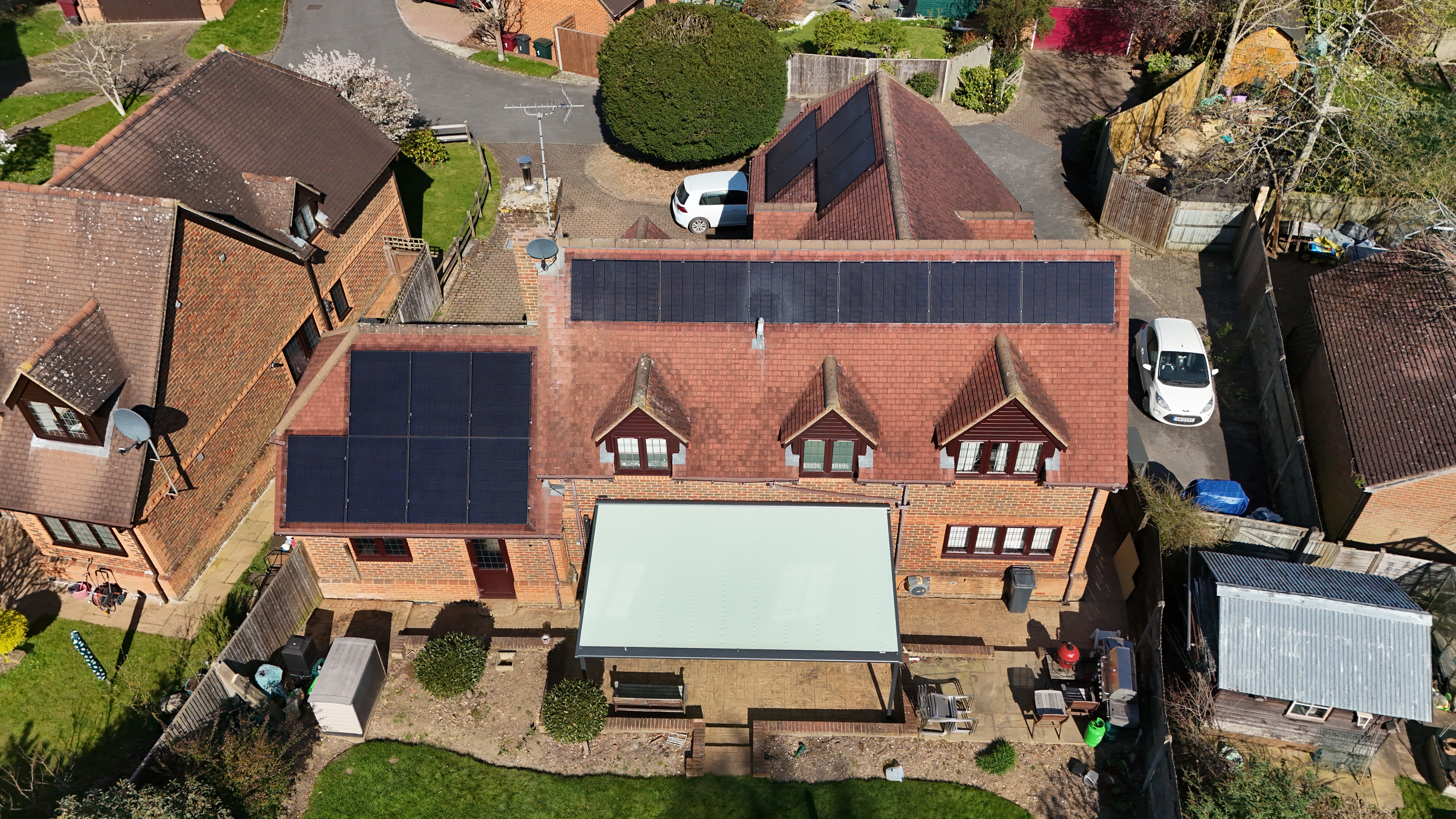
- A 36.96 kWp solar PV array made up of 65 high-efficiency all-black panels
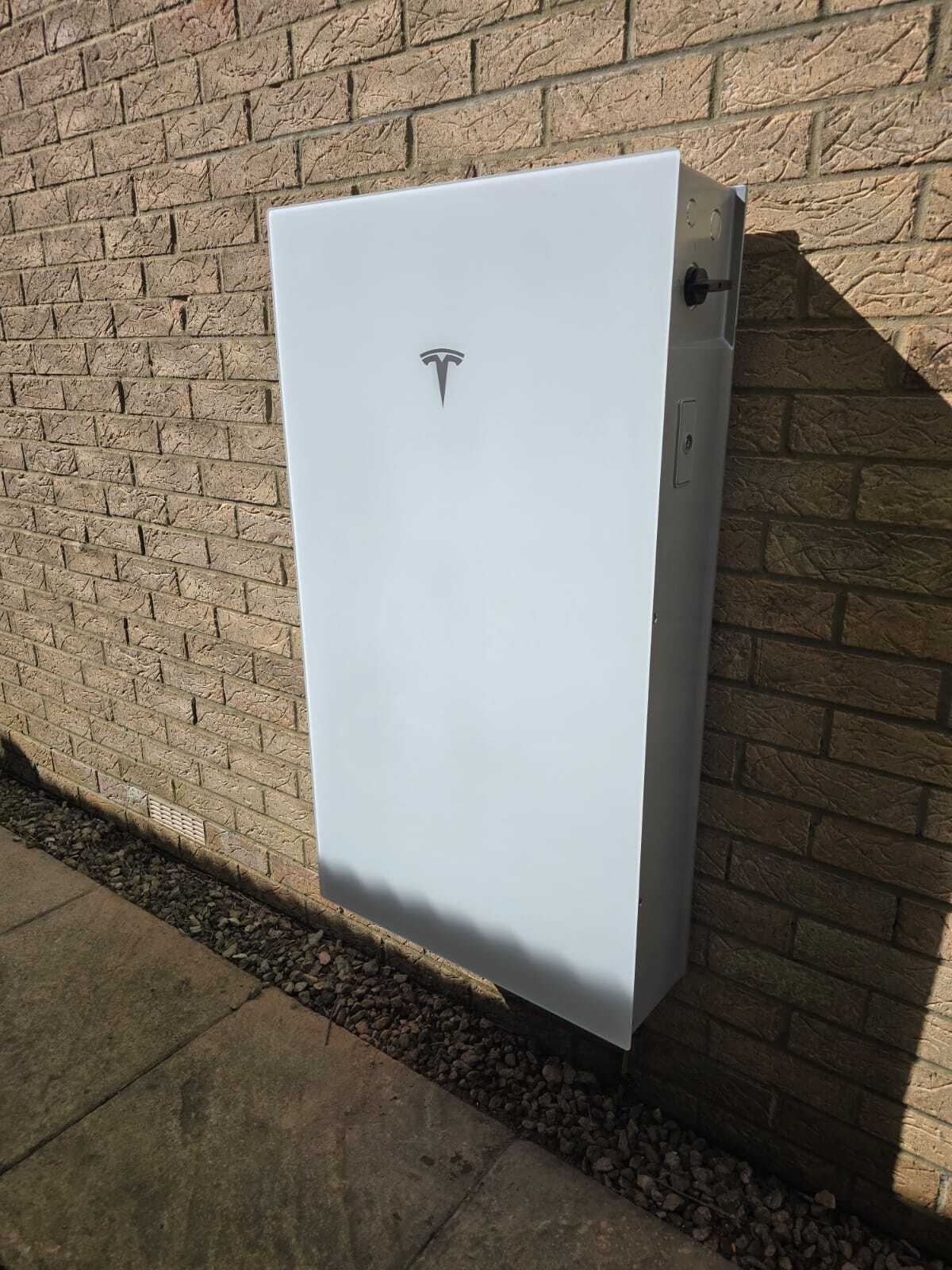
- A 40.5 kWh battery storage system using three Tesla Powerwall 3 units
- A Tesla Backup Gateway enabling whole-house backup functionality
Annual solar generation is estimated at 22,285 kWh, comfortably exceeding the home’s annual electricity demand of around 10,000 kWh. Excess generation is either stored in the batteries or exported to the grid, depending on demand and tariff conditions.
With battery storage included, the system is modelled to deliver up to 90% grid independence, with only minimal reliance on peak-rate electricity imports during the darkest winter periods.

System Performance and Energy Usage
Modelling shows that electricity generated by the system is used in four main ways:
- Solar used directly in the home
- Solar stored in the batteries for later use
- Off-peak grid charging when advantageous
- Export of surplus electricity to the grid
Across the year, approximately 84% of the home’s electricity needs are met by solar and battery, with peak grid usage reduced to just 2% of annual consumption. During spring and summer months, solar generation frequently exceeds household demand, allowing large volumes of clean electricity to be exported.
Typical daily solar generation averages:
- Winter: approximately 45 kWh
- Spring: approximately 52 kWh
- Summer: approximately 71 kWh
This ensures strong performance even outside peak summer conditions.
Financial Savings and Long-Term Benefits
Over a 25-year period, the system is forecast to deliver £150,616 in electricity savings, based on conservative energy price assumptions. Average electricity costs over the next 15 years are expected to fall from 46.5 p per kWh without the system to 30.5 p per kWh with solar and battery installed.
Key financial benefits include:
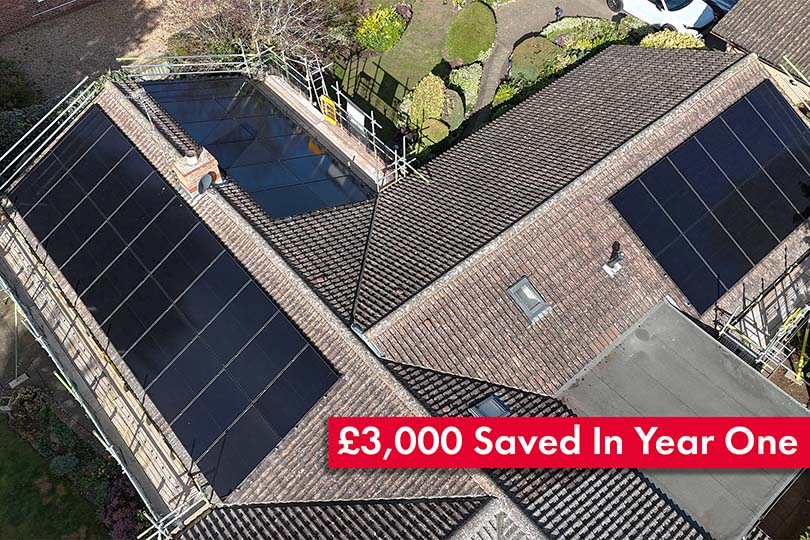
- First-year electricity savings of approximately £3,975
- A projected payback period of around 12 years, depending on future electricity inflation
- A strong internal rate of return under a wide range of pricing scenarios
By generating and storing electricity on-site, the homeowner is effectively insulated from long-term grid price volatility.
Environmental Impact
The system offsets approximately 4,457 kg of CO₂ every year, equivalent to:
- Planting over 2,100 trees over the system’s lifetime
- Removing the emissions associated with nearly 19,000 miles of petrol car travel per year
Over 25 years, this represents a substantial and measurable reduction in household carbon emissions.
Conclusion
This solar and battery installation demonstrates what is achievable when system design is driven by performance rather than minimum specification. By combining a large solar array with substantial battery storage, the property benefits from high levels of energy independence, predictable long-term savings, and meaningful carbon reduction.
The project highlights how homeowners with higher-than-average electricity demand can use solar and battery storage not only to reduce bills, but to take long-term control of their energy future.


.jpeg)