


Electricity prices are going up roughly 5% this July. For most households that means a bigger bill and not much else. But if you have solar, a rising electricity price works in your favour - in two ways that most payback quotes completely ignore.
The saving grows every time the price rises
Solar pays you back two ways: you get paid for electricity you export to the grid, and you avoid buying electricity at the grid price by using your own generation instead.
The big one is the electricity you use yourself. Every unit you generate and consume is a unit you don't buy from your supplier. So when the grid price rises 5%, the saving on every self-consumed unit rises 5% with it. Nothing changes on the roof. The system just saves you more, because the electricity it's replacing got more expensive.
That compounds over time. Electricity has roughly tripled since 2008 - from around 9p per unit to around 26p today. That's approximately 6% a year on average.
Take £1,000 of electricity you're avoiding with solar each year. At 6% annual price growth, that same saving is worth around £1,700 in ten years, and close to £4,000 a year by year 25. Same panels. Same roof. Across the life of the system, that adds up to roughly £55,000 in avoided costs - compared to around £25,000 if prices had stayed flat. Most payback calculations don't include that compounding at all.
What it looks like on a real installation
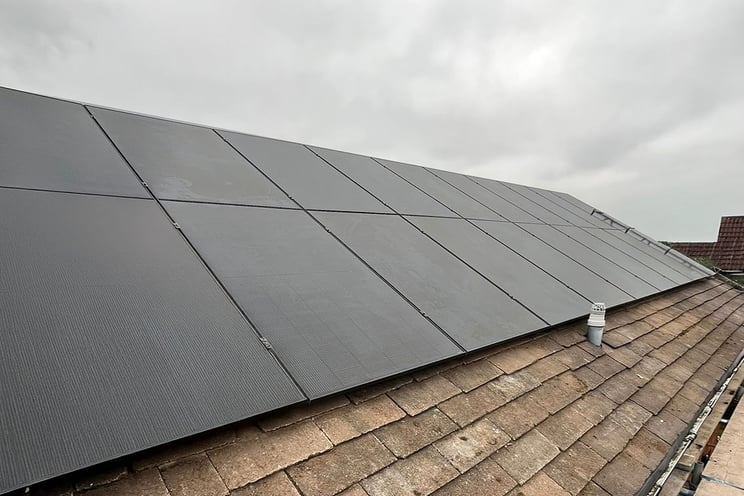
Spirit Energy fitted a home in Reading with 22 panels and a Tesla Powerwall 3. The household used around 8,000 kWh per year. The annual electricity bill dropped from roughly £2,040 to £171.
The portion of that saving that grows with electricity prices - the grid electricity the household no longer buys - is around £1,150 per year. Every price rise like July's makes that £1,150 worth a little more.
The saving is also an asset when you sell
Those avoided costs don't disappear when you move. A home that costs less to run is worth more to a buyer. You're not leaving the saving behind - you're showing the buyer what the system will save them over the years ahead.
The first system Spirit Energy ever installed was on the Charles's family home in Reading, in 2010. When the family moved a few years later, the buyer was shown a forecast of what the solar would save them. They paid more for the house as a result.
For Spirit Energy customers, when you come to sell, we calculate what those future savings are worth in today's money (a figure called net present value) and provide a certificate you can give to buyers, showing exactly what they're acquiring.
Does this apply to every system?
The gain applies to electricity you use yourself. Power you export to the grid is paid at a separate, lower rate, and that rate doesn't track the rising cost of buying electricity.
So if you have panels but no battery, a significant portion of your generation gets exported cheaply during the day while you're out, and then you buy electricity back at full price in the evening. You miss most of the compounding effect.
A battery changes that. It stores your daytime generation so you use it yourself when it's worth the most, rather than selling it for less than it costs to replace.
What the July rise means for commercial customers
For businesses, the same logic applies - just at greater scale. A site avoiding 40% of a large electricity bill through solar is protecting that saving from every future price movement, not just this one.
The one practical note worth mentioning: price rises tend to bring forward a lot of enquiries at once. Installation calendars fill, and with a finite pool of qualified labour, pricing tends to firm up alongside demand. DNO applications take six to eleven weeks regardless. There is no particular urgency, but the businesses that tend to get the best outcome are the ones that run the numbers before the queue forms and before the quotes do too.
What this means if you're deciding now
The one part of your electricity bill you actually control is how much you have to buy in the first place. The return on every unit you generate yourself increases with every price rise, and it compounds for as long as the system is on the roof.
Which also means waiting has a cost - not just any future change in system prices, but every month you continue buying electricity at full price that you could have been generating yourself.
If you are interested in learning what is your opportunity cost of not installing solar get in touch with one of our in-house engineers for a commitment-free quote.