

Spirit Energy now installs solar and battery systems for homeowners anywhere in the UK, not just within two hours of its Reading base. The only thing that changes outside that radius is who physically carries out the survey and installation: a local technician, vetted by Spirit Energy, rather than one of its own in-house teams. Design, specification, contract, warranty and aftercare all stay with Spirit Energy regardless of where you live.
Why installer quality is the real risk in solar
Solar is one of the largest purchases most homeowners make, and the panels themselves have become fairly standardised. The variable that actually determines whether a system performs for 25 years is workmanship: how the roof penetrations are sealed, how the array is wired, whether the design accounted for shading properly. Independent guides on choosing a solar installer consistently flag the same pattern: a poor installer can leave you with an underperforming system, shoddy workmanship, and no meaningful recourse when problems go wrong, and the difference between a good and bad installer often doesn't show up until months or years later.
What actually changes when Spirit Energy works outside its two-hour radius
Nothing about the design process changes. Spirit Energy still models the customer's electricity usage, still specifies the panels, inverter and battery, and still owns the financial projections given to the customer. The only step handed to a third party is the physical survey and install, carried out by a technician Spirit Energy has vetted directly.
We deliberately spent a year trialling this model before launching it, vetting each local technician individually and turning down partnerships we weren't confident in. That's a slower rollout than most national expansions, and it's the reason the network is deliberately kept small rather than broad.
What "vetted" means in practice
Spirit Energy's contract stays directly with the customer, not with the local technician. That matters because it means the accountability for the installation, and the warranty behind it, sits with Spirit Energy rather than a subcontractor who may or may not still be trading in five years. If a system installed in 2010 needs support today, the same in-house support team answers, whether the original install was done by a Spirit Energy employee or a vetted local partner.
This lines up with the general advice given to anyone comparing installers: RECC, TrustMark, NAPIT and NICEIC all exist because installers must prove their work and customer service meet a set standard before they can join, and a workmanship guarantee that sits with a company with a real track record is worth more than one from a business with no history behind it.
A live example: a 44-panel install in Peterborough
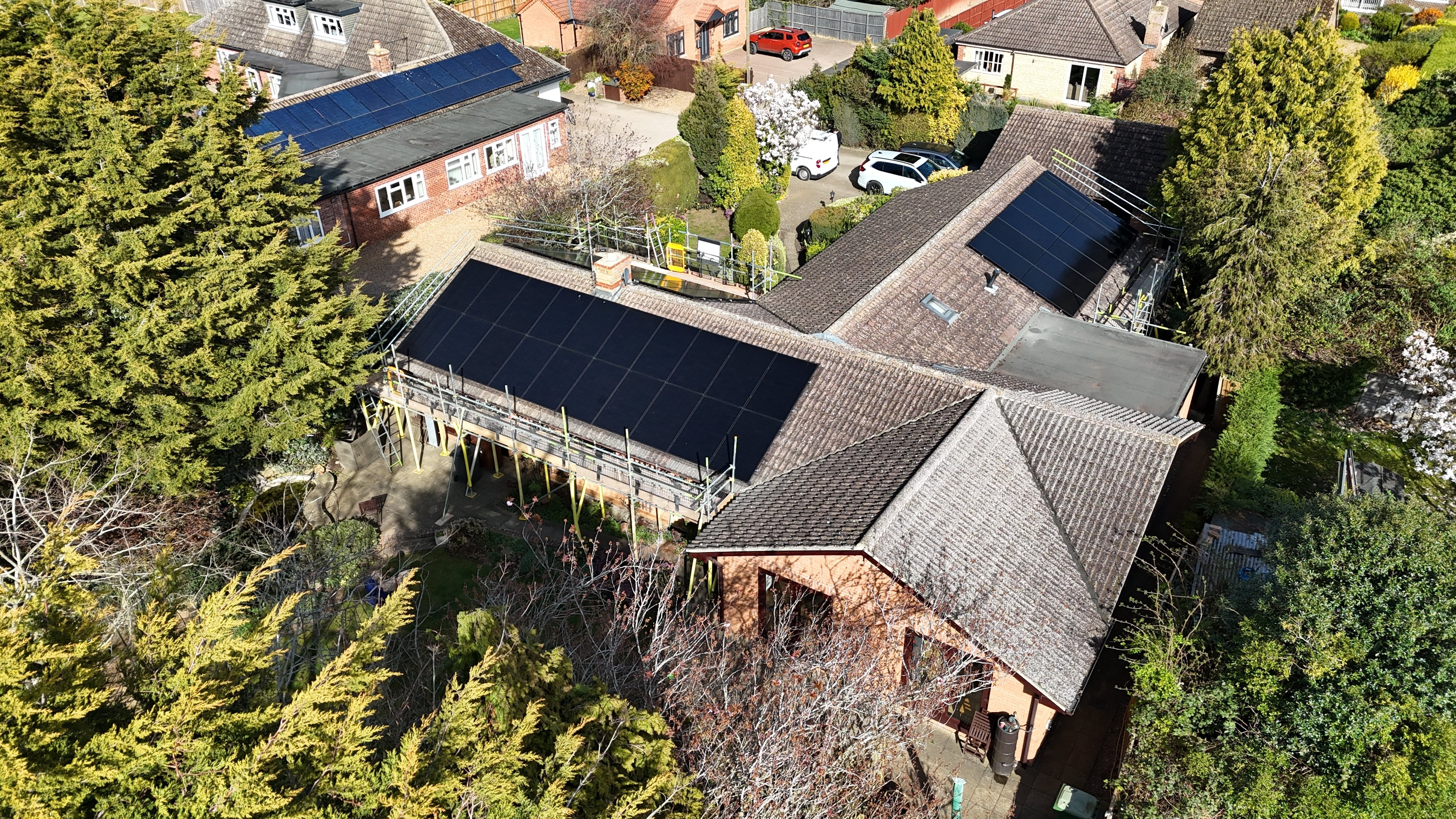
Spirit Energy's Peterborough project, carried out under this model, shows the process end to end. The system uses 44 panels across three roof orientations, south, west and east, chosen to spread generation more evenly through the day rather than concentrating output around midday. Two Tesla Powerwall 3 batteries and two Tesla Wall Connectors complete the system.
The battery capacity was deliberately sized slightly below the property's full consumption. Battery storage is the most expensive part of a solar system, so Spirit Energy's approach is to size it so it cycles fully most days rather than sitting partly idle, then review real usage data a year later before deciding whether to add more. The system was installed with that expansion already designed in, so extra storage can be added without redoing existing work.
Forecast year one performance for this installation is over £3,100 in electricity bill savings plus £1,800 in export income through the Octopus Go tariff, a combined £4,900. The design work, financial modelling and specification were all carried out in-house by Spirit Energy; the survey and physical installation were carried out by a vetted local technician.
What this means if you're outside the Reading area
If you're within two hours of Reading, nothing changes: you get Spirit Energy's own installers as before. Outside that radius, you get the same design process, the same components, the same contract, and the same long-term support, with the installation itself carried out by a technician who has already been through Spirit Energy's vetting process. The company has been explicit that it would rather turn down a job than hand it to someone it isn't confident in, which is why the list of local technicians it works with nationally stays deliberately short.