

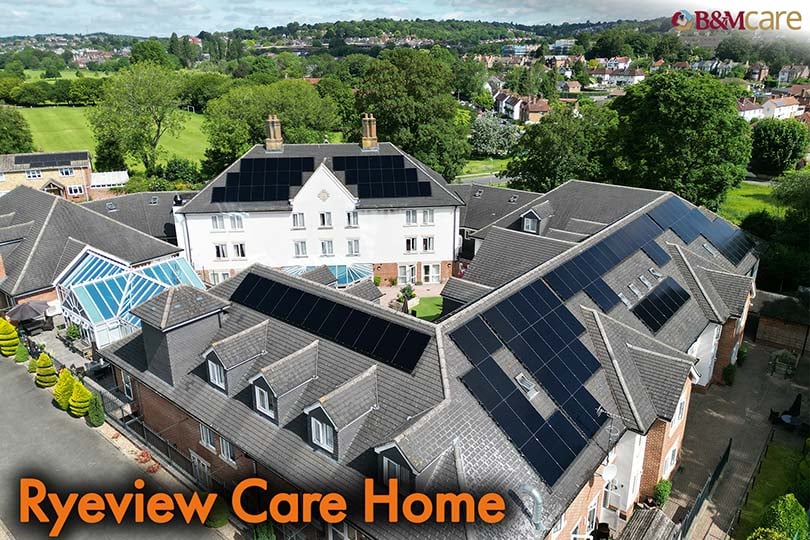
 Ryeview Manor Care Home, part of the B&M Care Homes group, installed a 63.25 kWp rooftop solar system with Spirit Energy that is modelled to save around £11,479 in its first year and pay for itself in roughly eight years. The system generates an estimated 55,188 kWh of electricity annually, the large majority of which is used directly on site to power a building that runs around the clock. Over its lifetime the installation is projected to return 208% of its value, with a net present value of £186,177.
The problem: a 24-hour building exposed to grid prices
Care homes are among the most electricity-intensive commercial buildings in the UK. Lighting, heating, laundry, kitchens, lifts, medical equipment, and call systems run continuously, and demand does not fall away overnight the way it does in an office or a school.
That steady, daytime-heavy load creates a specific financial problem. A care operator has very little control over its single largest controllable overhead. Import rates are tied to wholesale electricity markets, which are driven by global gas prices, government policy, and grid costs. None of these are things a care home manager can negotiate down.
For a portfolio operator like B&M Care Homes, that exposure is multiplied across every site. Doing nothing is not a neutral position. It means staying fully exposed to whatever electricity prices do over the next two to three decades.
The solution: a system matched to daytime demand
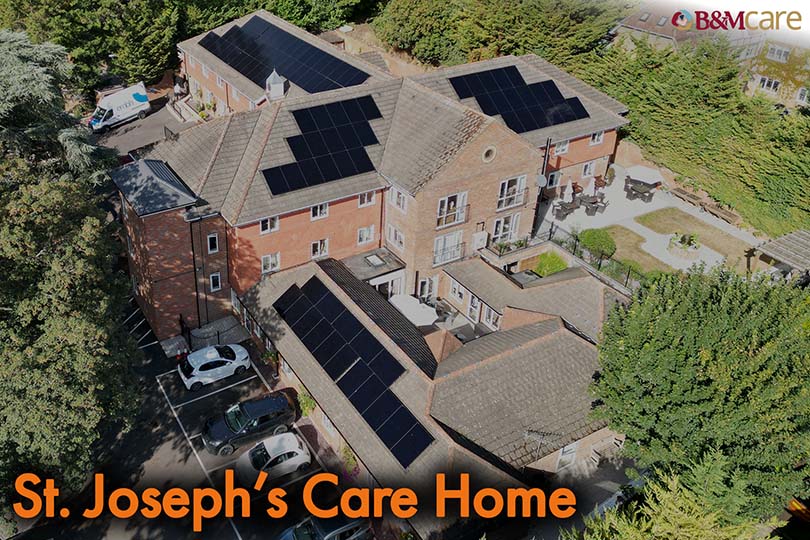
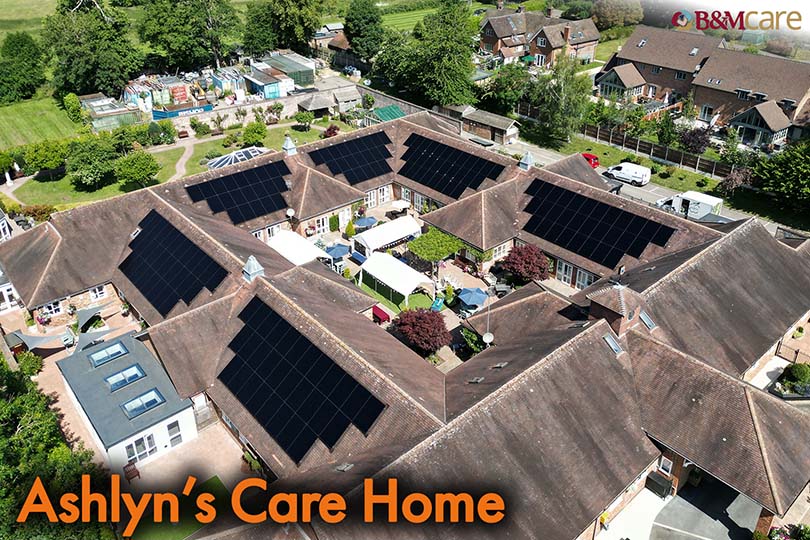
Spirit Energy designed a 63.25 kWp array specifically around Ryeview Manor's roof and its consumption pattern. The system is made up of 139 AIKO 455 W panels, with an active cell area of approximately 277 m²
The panels are mounted on the pitched roof using brackets fixed to the rafters with over-roof mounting frames, spread across three roof orientations to capture generation through more of the day. The DC array feeds two Solis 25K-S5 inverters housed in a top floor riser cupboard, keeping the main electrical plant tidy and internal.
The design assumes 80% of generation is consumed on site, with 20% exported. In practice that means roughly 44,150 kWh used directly by the home each year, displacing electricity that would otherwise be bought from the grid at around 26p per kWh.
What the numbers look like
The financial case for Ryeview Manor rests on self-consumption rather than export, which suits a care home's continuous daytime load.
- Estimated first-year savings: £11,479
- Payback period: approximately 8 years
- Internal rate of return (IRR): 15%
- Net present value (NPV): £186,177
- Absolute return on investment over the system life: 208%
Payback is a useful figure, but net present value tells the fuller story. NPV values the electricity Ryeview Manor will avoid buying in future years, in today's money. Electricity avoided in fifteen or twenty years is likely to be far more expensive than electricity today, which is why the modelled return climbs well above the headline saving. These figures are first-year and modelled estimates based on the MCS methodology, not a guarantee of performance.
How the installation worked around an occupied home
A care home cannot pause its operations for a solar installation, so the project was planned to minimise disruption to residents and staff.
The bulk of the work was a straightforward rooftop array installation, with the inverters and metering located internally and protected, ready for connection once network permission was in place. Spirit typically carries out the roof work ahead of full Distribution Network Operator permission, then completes the electrical connection and commissioning once approval is received.
The Ryeview Manor project also included re-tiling the section of roof where an older solar thermal system had previously been fitted, with the redundant thermal units removed to ground level for disposal. Replacing the roof covering at the same time as installing the new panels avoided a separate future job on the same roof area.
The environmental case alongside the financial one
The system reduces Ryeview Manor's carbon emissions every year by displacing grid electricity with on-site generation. For care operators facing tighter net-zero expectations and growing scrutiny from local authorities and commissioners, on-site solar provides measurable, reportable carbon reductions.
For a group operator, the benefit compounds. B&M Care Homes runs 22 sites, and a roof-by-roof solar programme turns a fleet of high-consumption buildings into a portfolio-wide reduction in both running costs and Scope 2 emissions.
Why this matters for other care operators
Ryeview Manor is one site in a wider pattern. Across Spirit Energy's installed care home portfolio, systems have delivered internal rates of return between 19% and 30%, with payback periods of three to six years and first-year savings ranging from around £4,500 to over £21,000 depending on system size.
The common factor is roof space combined with high, steady daytime demand, which is exactly the profile most care homes share. If a building has suitable roof area and uses most of its electricity during daylight hours, the case for on-site solar tends to be strong.