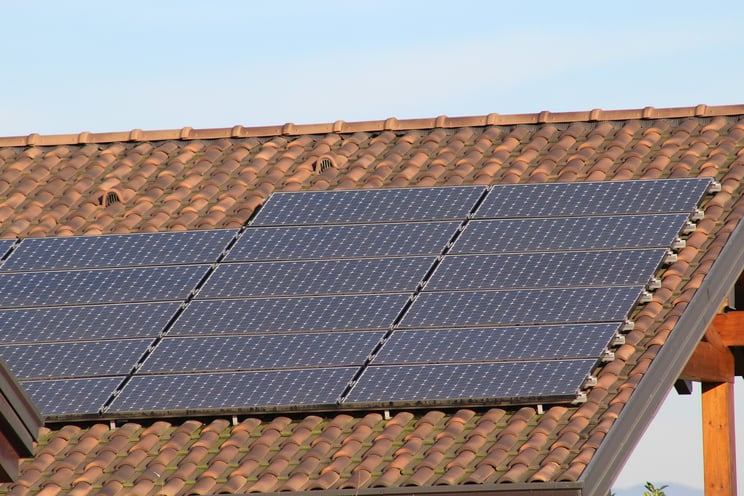
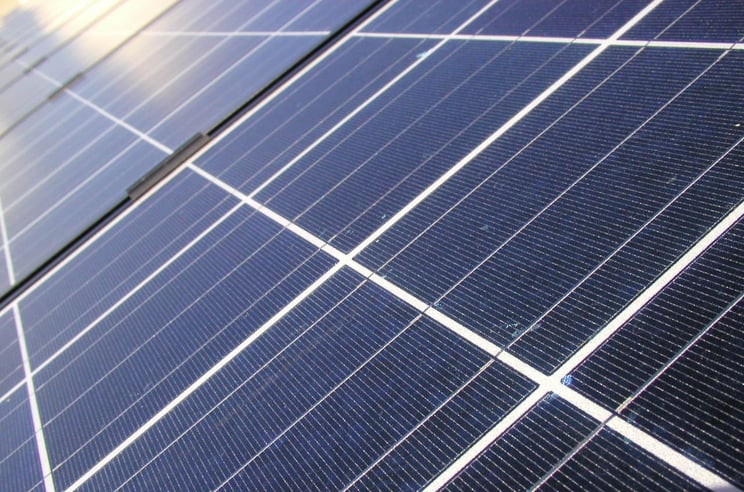
It’s important to do your research when planning your solar system, but the sea of technical terms can soon become overwhelming. Let’s address some of those you may come across when comparing types of solar panel - and see how those types stack up.
Why does the solar panel output matter?
When installing solar panels there are many things to deliberate over, whether that be the price or aesthetics, but probably the most important metric to consider is the output. More often than not the price you pay for an installation will be relative to the power output of the system. The rated power output or wattage of a panel represents the theoretical power output under ideal conditions and is a strong indication of the amount of electricity a panel will generate. However, there are factors other than the panel’s wattage to consider when determining its output or energy generation.
The solar PV industry has faced a year of change in 2019, with more uncertainty lying ahead. First came the end of the Feed-in Tariff, the guaranteed payments for people generating solar energy. The 50% deemed Export Tariff for smaller systems ended at the same time and we’re still waiting to see what will fill the gap, to prevent customers with new solar systems from exporting excess electricity to the grid for free. (Don’t worry, this doesn’t impact people who installed their system before the final Feed-in Tariff deadline of 31st March 2019.) The current proposal from the government is the Smart Export Guarantee (SEG) - more on this below. As a final kick in the teeth to the industry, another threat to solar PV installation has resurfaced - a potential solar VAT rise on domestic systems from 5% to 20%.
So what does all this mean to you? Is solar PV still worth installing now, either as an extension to your existing system, or as a new system altogether, or should you wait? And what about a solar battery?
Yesterday I had my own modest version of a Victor Kiam moment.
If you are too young to remember Mr Kiam, spend 30 seconds watching this… Mr Kiam's famous line ‘I loved the shaver so much I bought the company’ was the cornerstone of a hugely successful 1979 advertising campaign.
Mr Kiam was swept away by the joy of a sharp shave. For me it was Tesla and the sheer passion with which they are pursuing their mission ‘to accelerate the world’s transition to sustainable energy’.
Topics: Battery storage, Tesla Powerwall
Around 30 GigaWatts of the UK’s older fossil fuel and nuclear capacity is due to be decommissioned by 2025. At the same time, more and more of us are taking delivery of our first electric car, pulling away from the lights much faster than the petrol heads while fuelling a significant increase in the national electricity demand.
Furthermore, with the advent of renewables, the problem of balancing supply and demand within the National Grid is become ever more challenging, leading to periods of excess demand and ‘negative electricity prices’.
And with all this comes an increasing expectation of power cuts, grid constraints and increasing electricity costs.
Enter battery storage, and in particular, home battery storage. And smart meters, and smart electricity tariffs.
Topics: Battery storage, Tariffs, Solar PV
Is electricity cheaper at night?
If like me, your gut answer is ‘of course electricity is cheaper at night’, read on…
Topics: Battery storage, Tariffs
In January SunPower introduced the world’s first 400 Watt residential solar panels.
Utilising 104 Monocrystalline Maxeon Generation III solar cells, the panels have an efficiency of 22.6%.
The panels have ‘standard’ panel dimensions of approximately 1.69m x 1.05m, giving an output of 226W per square metre.
As always with SunPower, the panels have a premium look…
Topics: Solar PV
A few weeks ago we launched a Solar PV Calculator and wrote a blog about solar in a post subsidy world.
However, for many people looking at renewables, solar is only one part of the story. Increasingly, solar goes hand-in-hand with battery storage. And many of us are at least wondering whether we should switch to an electric car.
Finally, in 2019 we expect to see a proliferation of ‘time-of-use’ electricity tariffs from the utility companies, all aimed at transforming electricity demand and supply.
To handle all of this, we’ve been busy developing the all-singing-and-dancing calculator which looks at the package of solar, battery storage, electric car usage and choice of tariff. And of course if you are building your dream home, you'll probably be wanting a heat pump...
Topics: Battery storage, Spirit Energy news, Calculator
The government says it wants the UK to be the best place in the world to build and own an electric vehicle.
To support this, it needs the National Grid to be smart, with a finely tuned set of tools available to balance demand and supply.
With this in mind, the government has announced that from July 2019, the grant of £350 per chargepoint available for home and workplace chargepoints will only be given to people installing smart chargers to charge their electric car.
Topics: Financing, EV charging
When the government announced in 2018 that it would close the Feed-in Tariff scheme with effect from 31st March 2019, it failed to put in place any replacement for the Export Tariff. Small scale solar PV systems installed after 31st March were likely to end up exporting excess solar generation to the grid for free.
Not surprisingly there was uproar within the industry at this prospect.
In response, the government has this week launched a consultation on the Smart Export Guarantee (SEG).